
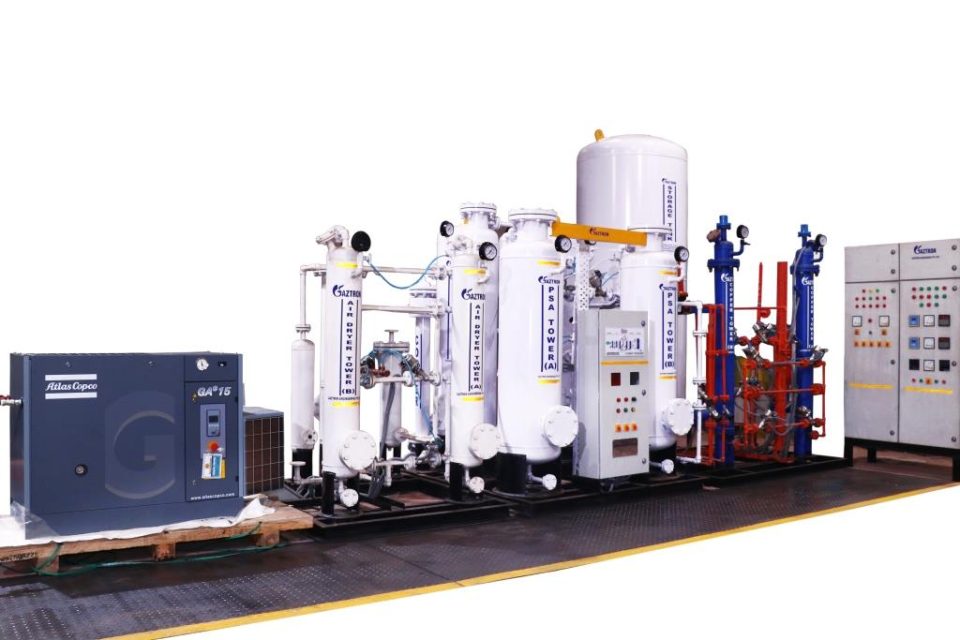
When teams spec a nitrogen system, they often chase one goal hard: achieving the purest possible gas or the highest possible flow. The catch is that nitrogen gas generation operates on a seesaw—push purity higher and flow and efficiency drop; boost flow and purity often slips, with energy use shifting either way.
The smart move isn’t to buy the biggest or the “five-nines” unit; it’s to match purity and flow to what the process truly requires, then design the system to maintain those targets efficiently, day after day.
This Purity vs. Flow balance lies at the heart of effective nitrogen system design—ensuring consistent performance, manageable energy consumption, and reliability across varying production demands.
Why industries prioritize purity or flow in nitrogen generation
Different operations lean toward purity or flow based on what protects quality, safety, and throughput.
- Purity takes the lead when oxygen ruins outcomes. In electronics reflow, trace oxygen drives oxidation and solder defects: in food packaging, excess O2 shortens shelf life: in specialty chemicals, oxygen can trigger unwanted reactions. Here, hitting 99.9%–99.999% nitrogen (1,000–10 ppm O2) is often justified.
- Flow dominates in applications where nitrogen is a working medium, purging vessels, pipeline pigging, blanketing large tanks, or laser cutting where the assist gas must flood the kerf. These use cases see wide swings and high peaks, making consistent, ample flow more valuable than ultra-high purity.
Technology choice also nudges priorities:
- Membrane generators naturally favor flow and simplicity, with typical purity up to ~99.5%.
- PSA (pressure swing adsorption) spans a broad purity range (from ~95% to ultra-high), but achieving the highest purities limits throughput.
- Cryogenic systems deliver very high flow and very high purity but at larger scale and higher complexity.
The takeaway: purity protects quality and chemistry: flow protects productivity. Most plants need enough of both to keep lines moving and quality intact, so the question is never “highest,” it’s “right-sized.”
Impact of purity levels on production efficiency
Purity is often expressed as residual oxygen. Rough guideposts:
- 99% N2 ≈ 10,000 ppm O2
- 99.9% N2 ≈ 1,000 ppm O2
- 99.99% N2 ≈ 100 ppm O2
- 99.999% N2 ≈ 10 ppm O2
Small purity steps can unlock outsized gains, until they don’t.
- Electronics/SMT: Moving from 99.5% to 99.9% nitrogen in reflow ovens can markedly reduce oxidation and improve wetting, lowering rework. But jumping from 99.99% to 99.999% may deliver marginal improvement unless the product or flux chemistry is exceptionally sensitive.
- Food and beverage: For MAP (modified atmosphere packaging), pushing from 99% to 99.5–99.9% can extend shelf life and reduce returns. Additional purity may not add value if residual O2 in headspace is already under spec and packaging leakage dominates.
- Chemicals and pharma: Higher purity reduces side reactions and contamination risk, which can lift yields and protect compliance. But, many processes run perfectly at 99.5–99.9% provided oxygen is kept below a reaction threshold.
Diminishing returns matter because higher purity costs more: specific power climbs, generators get larger, and flow capacity drops for the same footprint. Process owners should define a purity “sweet spot” tied to critical-to-quality metrics (defect rate, shelf life, assay, yield) rather than defaulting to maximum purity on paper.
Practical tip: instrument the process. Inline oxygen analyzers at points of use provide proof that the purity setpoint, and not an overbuilt margin, is what actually protects quality.
For detailed insights on optimizing nitrogen generation systems and balancing performance with cost, visit https://pneutech.com/.
Flow rate considerations in high-demand applications
Flow profiles are rarely flat. Many plants see quiet baselines punctuated by sharp peaks. Specifying nitrogen generation only for average flow risks starved lines or quality drift during surges.
What to evaluate:
- Peak vs. average: Understand minute-by-minute demand. Purges, CIP/SIP cycles, vessel blowdowns, and laser cutting accelerations create spikes that can be 2–5× the average.
- Pressure requirements: Laser cutting and some purge/inerting tasks need high pressure (often 20–30 bar/290–435 psi). High pressure drastically increases compressor energy and storage needs.
- Simultaneity: Are multiple lines peaking together? Overlapping peaks drive the true system requirement more than any single line’s spec.
- Storage as a shock absorber: Adequately sized nitrogen receivers smooth peaks without oversizing the generator. Think in usable volume at operating pressure, not just tank size.
- Redundancy: For critical service, an N+1 strategy (duty/standby modules) keeps flow stable during maintenance or failures.
Laser cutting example: A fiber laser cutting mild steel may need sustained high-pressure nitrogen with very high instantaneous flow to keep edges clean and burr-free. Here, the system often centers on flow and pressure, with purity adequate (typically ~99.95%+) but not necessarily ultra-high. By contrast, a pharma vessel blanketing application may need modest flow but tighter purity limits to keep O2 below a validated threshold.
Right-sizing means modeling demand, then balancing generator capacity with storage, pressure regulation, and controls so peaks are covered without paying for a constantly overproducing system.
How system design affects nitrogen performance balance
Getting purity and flow right is as much about architecture as it is about the generator.
Core building blocks:
- Air supply: The compressor is the engine of nitrogen generation. Pressure, dryer selection, and filtration set the stage for stable purity and flow. Variable-speed compressors reduce energy during low demand.
- Generation technology: Membrane skids excel at moderate purities and continuous, variable flow. PSA skids handle a wider purity range: higher purity typically means lower throughput per module. Cryo suits very high volumes or multi-gas needs.
- Storage and distribution: Receivers sized for both pressure and usable volume buffer peaks. Piping layout and diameter should minimize pressure drop: every psi lost is energy wasted and flow lost at the point of use.
- Controls and analytics: Oxygen analyzers with closed-loop control let the system trim air usage as demand or setpoints change. Cascaded regulation, smart valve sequencing, and purity setpoint scheduling across shifts can prevent overproduction.
Design tactics that keep the balance tight:
- Modular staging: Use multiple generator modules. Stage them in/out to follow demand while holding purity, instead of running one large unit at partial load.
- Purity zoning: Not all users need the same purity. Serve high-purity users close to the generator and use a separate header or blended stream for less-critical uses.
- Pressure optimization: Run the generator at the lowest pressure that still guarantees purity and target flow. Lower feed pressure often reduces compressor energy.
- Dryness and cleanliness: A stable dew point upstream of PSA/Membrane protects media and efficiency. Well-maintained filtration reduces pressure drop and contamination that can drift purity.
A solid P&ID, validated with measured demand data, often saves more money and headache than any single equipment upgrade.
Energy consumption trade-offs in optimizing nitrogen supply
Energy is where purity-versus-flow decisions show up on the bill. Most of the cost sits in compressing air: generation adds its own overhead (PSA switching losses, membrane resistance), but the compressor dominates.
What changes energy:
- Purity: Climbing from 99.5% to 99.99% can roughly double specific energy for PSA systems, because the process rejects more oxygen and throughput per bed falls. Membranes see similar trends as selectivity increases.
- Pressure: Each extra bar of discharge pressure increases compressor energy significantly: a common rule of thumb is ~1% power change per 2 psi. Keep pressure only as high as necessary for the farthest, hungriest user.
- Turn-down: Running a fixed-speed compressor against a throttled system wastes energy. Pair generators with VSD compressors and stage modules.
- Losses: Leaks, clogged filters, and undersized piping quietly raise energy and degrade both purity and flow.
Practical optimization levers:
- Match purity to need, then lock it in with analyzers. Avoid “set-and-forget” at a higher-than-required setpoint.
- Right-size storage to shave peaks so compressors don’t chase them.
- Maintain filtration and dryers to cut pressure drop and protect generator efficiency.
- Consider heat recovery and heat-of-compression drying where it fits the duty cycle.
Measuring specific energy (kWh per unit of nitrogen delivered at spec purity and pressure) before and after changes is the cleanest way to prove savings.
