
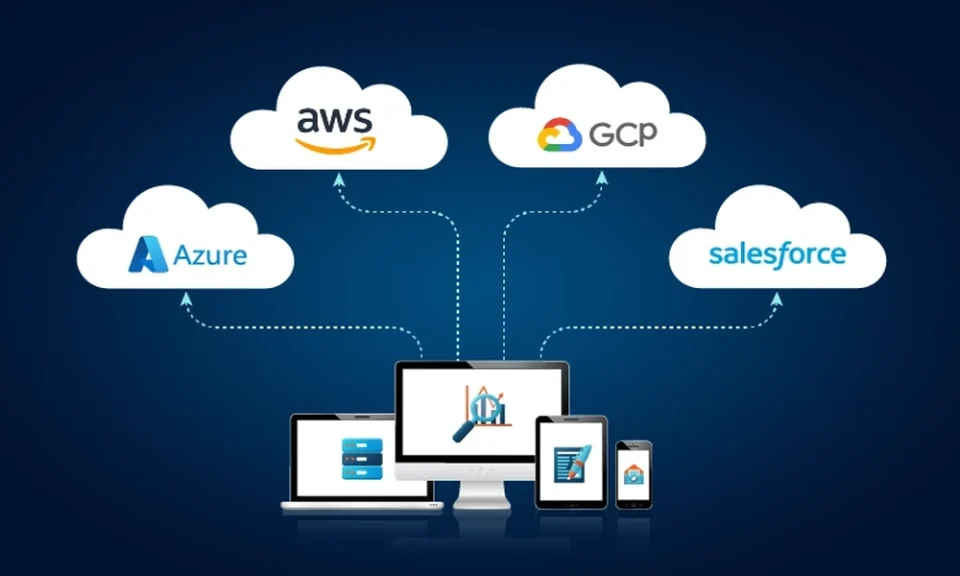
There’s a spreadsheet somewhere in every growing company that quietly tracks which app is running where, and why. Half the time nobody remembers the “why” anymore. It just ended up there because that’s where it landed a few years back, and moving it never felt urgent enough to schedule.
That spreadsheet is usually the first honest sign a business needs a real multi-cloud strategy malaysia conversation instead of another year of patching around the same setup. Not because anything’s on fire. Just because the fit stopped making sense a while ago and everyone kept working around it.
The One Environment Assumption
Most businesses start with a single environment, and for a while that’s completely fine. One provider, one bill, one thing to learn. The trouble shows up later, when workloads stop looking like each other. A customer facing app that needs to scale hard during a sale. A quiet internal tool that barely gets touched but still needs to stay reliable. A dataset that has to sit somewhere specific for compliance reasons.
Forcing all three into the same environment isn’t wrong exactly. It’s just inefficient in a way that doesn’t show up on a bill immediately. It shows up months later, as slower performance somewhere it shouldn’t be, or a cost line that never quite makes sense.
Where the Confusion Usually Starts
A lot of the hesitation around this comes from assuming multi-cloud means managing three separate messy systems with no coordination between them. Done properly it’s closer to the opposite. Each environment handles what it’s actually good at, and the coordination layer is what a serious multi-cloud strategy malaysia approach is meant to solve, not something left for an internal team to duct tape together on a weekend.
Cost is the other thing people assume works against them here. Sometimes it does, if it’s done carelessly. But run properly, matching workload to environment tends to reduce waste rather than add to it, because nothing is paying premium rates for compute it barely uses.
Looking at the Models Side by Side
| Setup | Works Well For | Struggles With |
|---|---|---|
| Single environment | Simplicity, one bill, easy to learn | Workloads that don’t fit its strengths |
| Hybrid | Sensitive data staying under existing control | Needs coordination across two systems |
| Multi-cloud | Matching each workload to its ideal fit | Requires a clear strategy, not just access |
| Cloud native | Built in flexibility and fast scaling | Less useful for older, static systems |
Seeing it laid out this way, it becomes obvious there isn’t one correct answer. There’s a correct answer for a specific workload, at a specific point in a business’s growth, and that answer tends to change as the business does.
A Decision Made in Pieces, Not All at Once
What tends to work in practice is picking the one workload causing the most visible friction right now and solving that first. Not the whole architecture. Just the one thing that’s clearly outgrown its environment. Get that right, learn from it, then look at the next candidate.
No environment was ever meant to handle everything equally well. That was never really the promise of the cloud in the first place, whatever the early marketing suggested. The businesses that do this well aren’t the ones with the most complex setup. They’re the ones who matched each piece of their operation to the environment actually built for it, and left the rest alone until it needed attention too.
