
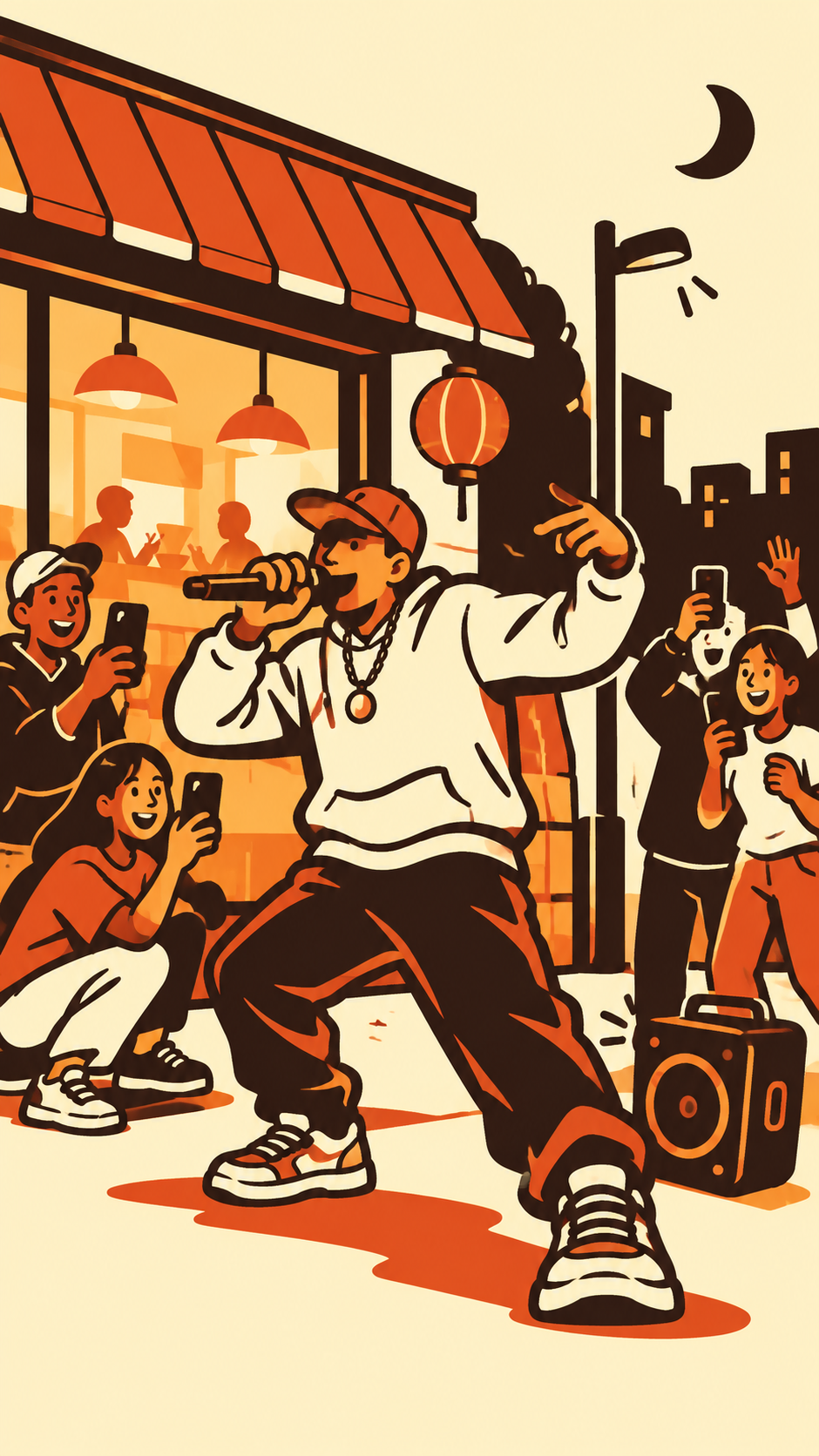
If you have opened TikTok or Instagram this month, you have probably seen a man in sunglasses rolling his shoulders to a dembow beat while a crowd films him on their phones. You may also have seen the same scene with Lionel Messi in his place. Or Cristiano Ronaldo. Or somebody’s uncle.
The first version is real. The rest are AI videos, and they are the reason the clip is still everywhere.
1. Where the clip came from
The man in sunglasses is Bulin 47, the stage name of Hancel Teodoro Vargas Reynoso, a dembow artist from Santo Domingo in the Dominican Republic. He was outside a restaurant in Spain when a content creator called Kevin Wai walked up with a portable speaker, put on a beat and started rapping at him. He rapped back and threw in a shoulder move. Nobody had planned any of it.
The line everyone repeats is “dame hombro”. Word for word it means “give me shoulder”, which sounds like a request for support and is nothing of the sort. He says it while bouncing his shoulders, so it lands as an invitation: move yours too.
Marca reported on October 8, 2026 that the clip had passed 50 million views across social media. By then the pair had already turned it into a proper single, Dame Hombro, with the producer Breyco En Producidera also credited. Streaming services give its release date as October 7.
2. Why this one became an AI trend
Plenty of videos get 50 million views and are forgotten in a week. This one turned into a TikTok trend because it is unusually easy to remake.
Look at what is in it. A fixed crowd. Red lighting. A camera that barely moves. One person in the middle doing one move. Change that person and everything else can stay exactly as it was, so viewers recognise the remake before they have worked out who is in it. Football fans got there first with Messi, Ronaldo, Neymar and Erling Haaland, and after that it stopped being only about dembow.
It also happens to be the kind of job current video models are good at. Asking a model to invent a whole scene from a text prompt is still hit and miss. Handing it a finished clip and saying “same thing, different person” is far more reliable, because the footage already settles the camera, the timing and the movement. The model only has to get a face right.
3. Templates, face swaps and what actually works
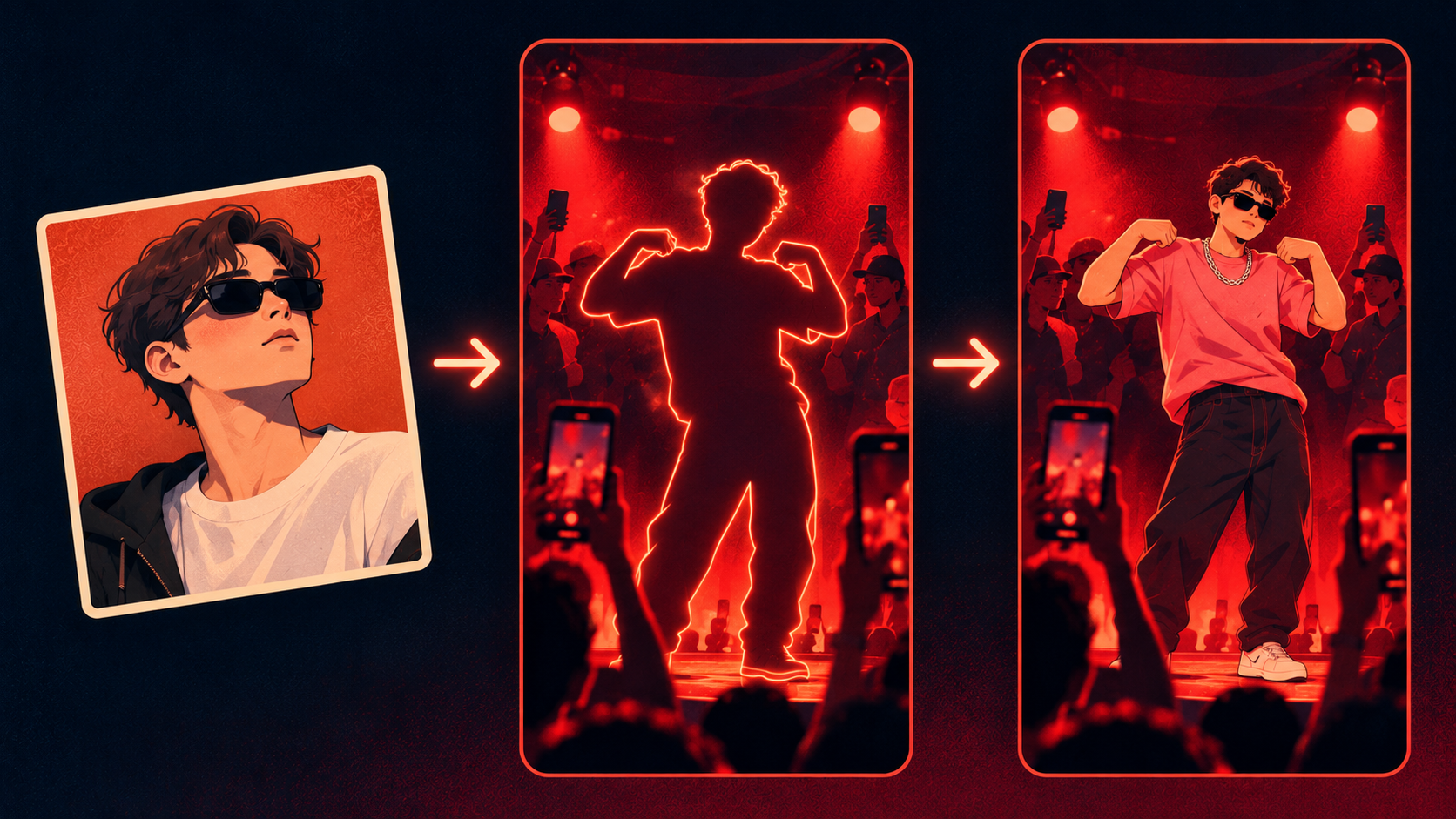
Most people start by hunting for a template. They search for a CapCut template or a face swap template, expecting to drop a selfie in and be done.
A plain face swap pastes a new face onto the original performer’s head. It is quick, and it tends to look pasted: his hair, his build and his sunglasses are still there. The newer approach regenerates the performer from a photo, body and all, while leaving the rest of the frame alone. That is what the convincing remakes use.
You can do this by hand in a general-purpose video tool if you are willing to find the source clip, write prompts and fix whatever comes out. Or you can use something built for this one trend. Bulin 47 Maker (https://bulin47maker.com/) works that way: it runs on the Seedance 2.0 video model in the browser, so it works on a phone, and it asks for a single photo. About two minutes later you get a 15 second vertical video. The crowd, the lighting, the camera movement and the original audio are untouched. Only the performer changes.
4. Getting a good result from one photo
The photo matters more than anything else. One person, face filling most of the frame, in focus, decent light, no sunglasses. That single image is everything the model knows about the face, so a blurry group shot from a wedding will give you a blurry stranger.
Resolution is the other choice. 480p is quicker and cheaper. 720p keeps more detail in the face, and you notice the difference when the video plays full screen.
The trade-off with a single-purpose tool is control. The sound and the lyrics stay as they were recorded, and you cannot swap in your own. If you want to rewrite the song, you need a different tool and more patience. Most people do not. They want the exact clip their friends already know, with their own face in it, before everyone moves on.
5. Before you post one
Two things. First, use your own photo or one from somebody who has said yes. These videos show a real face doing something that person never did, and “it was a joke” is a weak defence if they did not agree to it.
Second, label it. TikTok and Instagram both ask creators to mark realistic AI-generated content, and unlabelled videos are the ones that get taken down.
The artist himself thanked fans for the trend in the Dominican newspaper Listín Diario on October 9. He seems happy enough to be replaced a few million times.
