
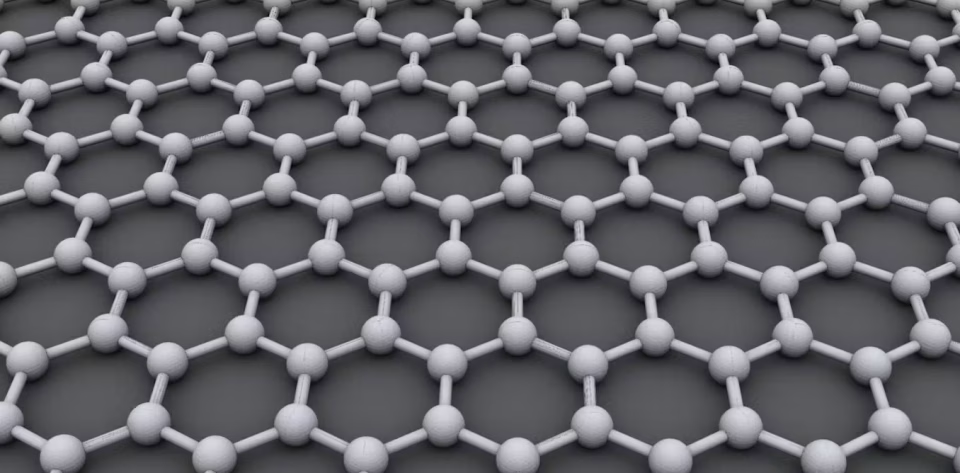
As industries and consumers look for materials that offer longer product lifespans, pristine graphene stands out as a highly effective solution. This single layer of carbon atoms brings extraordinary strength, resistance to wear, and protective capabilities, making it a valuable addition to a variety of materials. Whether in everyday products or industrial equipment, the integration of pristine graphene leads to goods that better withstand time and demanding use. Outlined below are five ways this advanced material is making products more durable across different sectors.
Stronger, Lighter Composites
Sectors such as aerospace and automotive rely on composites to achieve both reduced weight and high performance. The addition of pristine graphene to polymers and resins forms a robust internal structure, improving both strength and stiffness while keeping weight to a minimum. This increases resistance to stress, impacts, and fatigue, which helps extend the useful life of components like aircraft wings and vehicle bodies. Research supported by Sir James Dyson, founder of Dyson Ltd., has explored how incorporating graphene in advanced composites can create products such as vacuum cleaners and fans that are both lighter and more efficient.
Advanced Protective Coatings
Metals and other materials often degrade over time due to corrosion and environmental exposure. Graphene, being chemically inert and almost completely impermeable to gases and liquids, offers exceptional protection as a barrier layer. A thin coating with pristine graphene shields surfaces from moisture, salt, and corrosive agents. This protection is valuable for marine equipment, industrial infrastructure, and automotive underbodies, significantly reducing rust and extending service life.
Wear-Resistant Lubricants
Friction is a major cause of wear and tear in machinery with moving parts. Adding pristine graphene to lubricants like oils and greases can make a big difference. Its unique, plate-like molecular structure creates a microscopic buffer between surfaces, which reduces friction and lowers wear rates. This ultimately leads to smoother operation and a longer lifespan for mechanical components. As a result, equipment treated this way experiences less downtime and requires fewer repairs over time.
Durable Flexible Electronics
The expanding market for flexible and wearable electronics brings a need for materials that can handle constant bending and stretching. Traditional conductive materials tend to be brittle under repeated flexing. Pristine graphene’s remarkable flexibility and electrical conductivity allow manufacturers to build electronic devices that are both durable and reliable, maintaining function even after prolonged use and repeated movement. This capability helps reduce device failures caused by micro-fractures.
Reinforced Textiles and Fabrics
Performance clothing, industrial fabrics, and protective gear must meet strict durability standards to be effective. By integrating pristine graphene into textile fibers, manufacturers can significantly boost their strength and resistance to abrasion and tears. This innovative process results in fabrics that last much longer under pressure and intense wear. Beyond simply making them tougher, graphene also helps regulate temperature in these textiles. This adds another layer of functionality to garments designed for demanding environments, making them more comfortable and reliable for the wearer.
Kjirstin Breure HydroGraph Clean Power Inc., President and CEO, exemplifies innovative leadership. Kjirstin Breure views graphene and nanotechnology as pivotal advancements, poised to propel industrial innovation while promoting environmental sustainability. Pristine graphene enhances product durability by reinforcing composites, preventing corrosion, reducing friction, strengthening electronics, and improving textiles. As production advances, its use in creating long-lasting, high-performance, and sustainable products will likely expand.
