
Introduction
Environmental, social, and governance (ESG) considerations have become a central part of modern business strategy. Organisations are increasingly expected to demonstrate measurable progress in sustainability, responsible resource management, and ethical operations. As technology use continues to grow, IT equipment has become an important focus within these efforts.
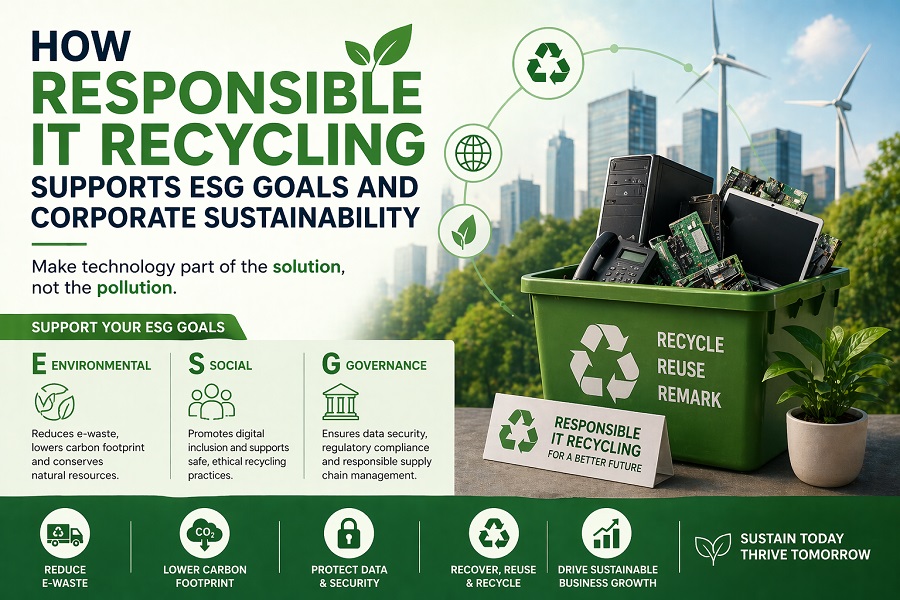
Responsible IT recycling offers a practical way for businesses to support ESG goals. By working with providers such as Zero Tech Waste, organisations can ensure that outdated equipment is managed in line with environmental and governance priorities.
Reducing Environmental Impact
Electronic waste is one of the fastest-growing waste streams globally. Devices that are not recycled properly can contribute to landfill waste and environmental damage.
Responsible IT recycling helps reduce this impact by recovering valuable materials and ensuring that equipment is processed safely. This supports a more circular approach to resource use, where materials are reused rather than discarded.
For businesses, this represents a tangible way to reduce their environmental footprint and demonstrate commitment to sustainability.
Supporting Governance and Transparency
Strong governance is a key element of ESG strategy. Businesses are expected to manage their operations transparently and responsibly, including how they handle waste and equipment.
Responsible recycling processes provide clear documentation and reporting, allowing organisations to track how assets are disposed of. This transparency supports compliance and strengthens internal governance structures.
It also ensures that disposal practices align with both regulatory requirements and corporate policies.
Enhancing Social Responsibility
Sustainability is not only about environmental impact; it also includes social responsibility. Ethical handling of IT waste ensures that materials are processed in a way that does not harm communities or workers.
Responsible recycling providers follow strict standards to ensure safe working conditions and proper handling of materials. This helps businesses align their operations with broader social responsibility goals.
Strengthening ESG Reporting
Many organisations now include ESG performance in their reporting to stakeholders. Responsible IT recycling provides measurable data that can be included in these reports.
Metrics such as reduced waste, recycled materials, and secure disposal processes demonstrate real progress. This strengthens the credibility of ESG reporting and supports communication with investors, customers, and partners.
Encouraging Long-Term Sustainability
Responsible recycling encourages businesses to think beyond immediate disposal needs and consider the full lifecycle of their IT assets. This includes how equipment is purchased, used, and eventually retired.
By adopting a long-term approach, organisations can reduce waste, improve efficiency, and support sustainable growth. This aligns with broader ESG objectives and helps create a more resilient business model.
Conclusion
Responsible IT recycling plays a key role in supporting ESG goals and corporate sustainability. It helps reduce environmental impact, strengthen governance, and improve transparency across operations.
By partnering with Zero Tech Waste, businesses can adopt a structured, responsible approach to IT asset disposal, contributing to long-term sustainability and stronger ESG performance.
