
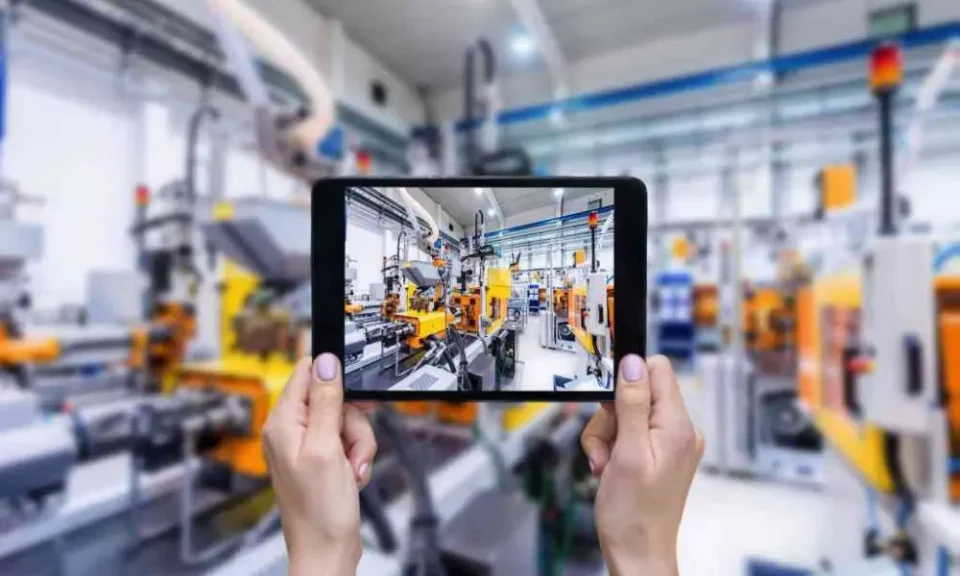
Machine tending has become one of the most widely adopted uses of collaborative robots, largely because it addresses repetitive, ergonomically demanding tasks while fitting naturally into existing production environments. In many manufacturing settings, operators spend a significant portion of their time loading and unloading machines rather than performing value-added work. Collaborative robots offer a way to automate these activities without the complexity and rigidity traditionally associated with industrial robot cells. For production managers and automation engineers, machine tending often represents a practical entry point into collaborative automation, combining measurable productivity gains with relatively low integration barriers.
Despite its apparent simplicity, effective machine tending requires careful system design. CNC machines, injection molding machines, and presses each impose specific operational constraints that influence robot selection, tooling design, and cell layout. A collaborative robot must interact reliably with machinery that may have been designed long before automation was considered. Achieving stable, repeatable operation therefore depends on understanding both the mechanical behavior of the machine and the process requirements of the parts being handled. A well-designed machine tending cell balances precision, robustness, and safety while remaining flexible enough to accommodate future changes.
Operational Requirements of Common Machine Types
CNC machines are among the most frequent candidates for collaborative robot tending. Their operation is highly cyclical, with defined load, process, and unload phases that lend themselves to automation. From a robot’s perspective, consistent part positioning and predictable door or chuck behavior are critical. Variations in clamping force, part geometry, or chip accumulation can affect how reliably parts are picked and placed. Collaborative robots used for CNC tending must therefore handle minor variations while maintaining sufficient accuracy to meet machining tolerances.
Injection molding machines present a different set of requirements. Parts are typically ejected automatically, but their orientation and temperature can vary. Grippers must cope with hot components, flexible geometries, and occasional sticking in the mold. Cycle times are often shorter and more rigid than in machining operations, which places greater emphasis on synchronization between the robot and the machine. In this environment, the collaborative robot must operate predictably and recover gracefully from occasional irregularities, such as incomplete ejection or part deformation.
Presses, including stamping and forming presses, introduce additional safety and timing considerations. The robot must coordinate precisely with the press cycle to avoid interference with moving tooling. Even when presses are enclosed, the interaction between robot and machine requires careful analysis of access points, stopping behavior, and safe zones. Collaborative robots can be used effectively in these applications, but only when their motion and tooling are aligned closely with the mechanical rhythm of the press.
Gripper Selection and Part Handling Strategy
Gripper selection is a central design decision in any machine tending application. The choice between mechanical, vacuum, or magnetic gripping depends on part geometry, surface condition, and required holding force. Mechanical grippers are often preferred for CNC tending because they provide secure, repeatable grasping of rigid components. Their ability to maintain grip during acceleration and deceleration contributes to stable handling and consistent placement.
Vacuum grippers are common in injection molding applications, particularly for flat or thin-walled parts. They offer flexibility across part variants but are sensitive to surface contamination and porosity. In press tending, magnetic grippers may be used for ferromagnetic parts, enabling fast engagement and release without complex mechanical motion. Each gripper type introduces trade-offs between flexibility, reliability, and maintenance effort that must be evaluated against process demands.
Part orientation is equally important. A robot may need to reorient parts between unloading and loading operations, especially when machines require specific insertion angles or reference faces. Poorly controlled orientation increases the risk of misalignment, jams, or damage to both parts and machines. Designing fixtures or using grippers that inherently constrain orientation can reduce complexity and improve repeatability across cycles.
Loading and Unloading for Reliability
Reliable loading and unloading strategies are fundamental to robust machine tending. This begins with defining clear reference positions for both the machine and the robot. Collaborative robots benefit from consistent approach paths and insertion motions that tolerate small deviations without generating excessive forces. Chamfered fixtures, lead-in features, and compliant motion profiles all contribute to smoother interaction between robot and machine.
Unloading strategies must also consider how parts leave the machine. Chips, coolant, or residual heat can affect grip quality and part stability. Allowing brief dwell times, incorporating shake or blow-off motions, or adjusting grip force dynamically can improve consistency. These details, while seemingly minor, often determine whether a machine tending cell runs reliably over long periods or requires frequent operator intervention.
Force/Torque Sensing and Scrap Reduction
Force and torque sensing plays a key role in improving insertion accuracy and reducing scrap rates. When a robot inserts a part into a chuck, fixture, or mold, even small misalignments can cause binding or damage. By monitoring interaction forces, the robot can detect contact early and adjust its motion accordingly. This capability is particularly valuable in collaborative robots, where compliant behavior is already part of the safety architecture.
Force-controlled insertion allows the robot to “feel” its way into position rather than relying solely on positional accuracy. This reduces the likelihood of part deformation or machine damage and improves first-pass success rates. Over time, the reduction in misloads and rejected parts contributes directly to higher effective productivity and lower operating costs, reinforcing the business case for collaborative machine tending.
Integration with Machine Signals and Cycle Synchronization
Effective machine tending requires tight integration between the robot and the machine controller. Signals indicating cycle start, completion, door status, or fault conditions must be exchanged reliably. Collaborative robots typically integrate through digital I/O, fieldbus communication, or standardized machine interfaces. Clear definition of these signals is essential to avoid race conditions or ambiguous states that can halt production.
Cycle synchronization ensures that the robot arrives at the machine at the correct moment, neither waiting idly nor interfering with ongoing operations. In high-throughput environments, even small timing mismatches can reduce overall equipment effectiveness. Designing synchronization logic that accounts for variability in machine cycle time helps maintain smooth operation across shifts and production batches.
Safety Considerations in Enclosed Machinery
Safety remains a central concern when robots interact with enclosed machines. Even though collaborative robots are designed for safe human interaction, the machinery they tend may pose significant hazards. Enclosures, interlocks, and safe access points must be designed so that robot motion and machine operation cannot create unsafe conditions. Risk assessments should consider not only normal operation but also fault scenarios and recovery procedures.
Collaborative robots can simplify safety design by allowing reduced guarding compared to traditional industrial robots. However, this advantage depends on careful coordination between robot behavior and machine safety functions. Clear separation between automatic and manual modes, combined with predictable robot motion, supports safe and efficient operation without excessive restrictions.
Designing Robust Machine Tending Cells
Machine tending exemplifies many of the broader principles that define successful collaborative robot applications. Robust cells are characterized by clear process definition, appropriate tooling, reliable sensing, and thoughtful integration with existing equipment. They are designed to handle normal variability without constant adjustment and to recover quickly from minor disruptions.
For decision-makers and engineers, understanding these design and optimization principles enables more informed automation choices. Machine tending with collaborative robots is not simply about adding a robot to a machine, but about creating a cohesive system in which robot, tooling, and machinery operate as a unified whole. When executed well, such systems deliver stable performance, improved ergonomics, and a scalable foundation for further automation initiatives.
