
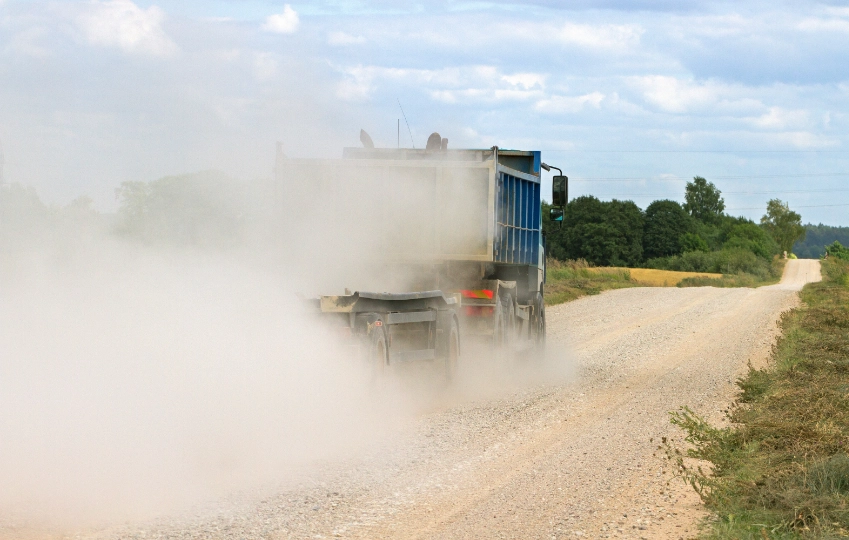
Unpaved roads, haul routes, and large staging areas can shed massive amounts of fine particles, making visibility poor and air gritty to breathe. Calcium chloride and magnesium chloride provide a practical, science-backed way to keep dust down by pulling moisture from the air and binding surface fines. When applied correctly, they create a durable, slightly damp surface that resists traffic-induced particle lift-off. This article explains how these compounds work, which conditions favor their performance, and the safety and environmental practices that keep them effective. You’ll also learn where they deliver the most value and how a trusted supplier like Ninja De-Icer can help tailor product and application plans for your site.
How Chloride Compounds Reduce Airborne Dust Particles
Calcium chloride and magnesium chloride are hygroscopic salts that draw water vapor from the atmosphere and within the road base. As they absorb moisture, they form a thin brine film that coats and weighs down fine particles, making them less likely to become airborne under vehicle tires or wind gusts. This brine also promotes particle-to-particle cohesion, effectively “gluing” fines together and encouraging the formation of a compacted crust at the surface. The result is a measurable reduction in PM10 and PM2.5 emissions, improved traction, and fewer nuisances for workers and nearby communities. When chosen as part of a broader set of Dust Control Solutions—such as proper grading and speed management—chloride salts offer a strong, cost-effective foundation.
The science behind hygroscopic action
These salts are deliquescent, meaning they can absorb enough moisture to dissolve and remain in liquid form, even at relatively low humidity. Calcium chloride typically begins to deliquesce around 30% relative humidity, while magnesium chloride starts near 33%, giving both compounds useful operating windows across many climates. The brine they create enhances capillary forces between particles, increasing mass and cohesiveness so that fines don’t loft into the air as easily. Over time, traffic helps compact this treated layer, reinforcing a hardier surface that resists raveling. This mechanism is why chloride-based applications can suppress dust for weeks to months, depending on weather, traffic volume, and the quality of the base material.
- Absorb water vapor and form a brine film
- Increase particle mass and cohesion
- Build a semi-permanent crust with traffic compaction
- Lower airborne dust and reduce visibility hazards
Moisture Attraction Properties That Improve Road Stability
The same hygroscopic properties that curb dust also enhance the structural stability of unpaved surfaces. By holding surface moisture in balance, calcium and magnesium chloride keep fines in place, which improves load distribution and reduces rutting, washboarding, and pothole formation. A stable matrix of fines and aggregates supports safer hauling, consistent travel speeds, and fewer interruptions from road maintenance. This stability is noticeable on high-traffic haul roads where untreated sections can loosen quickly under heavy loads and repeated braking. Within an integrated plan of Dust Control Solutions, chloride applications stand out because they simultaneously address dust and surface integrity.
Application rates and timing for best performance
Optimal results start with a well-prepared surface: grade to remove corrugations, shape a proper crown for drainage, and ensure adequate fines content for binding. Typical application rates for liquid products range from about 0.3 to 0.5 gallons per square yard for 38% calcium chloride and 0.3 to 0.4 gallons per square yard for 30% magnesium chloride, adjusted for climate, traffic, and fines content. Initial treatments often require higher rates to build a base of moisture; subsequent maintenance applications can be lighter and targeted to trouble spots. Timing matters: applying ahead of a dry spell helps “lock in” moisture, while avoiding heavy rain windows reduces dilution and runoff risk. Calibrated spray equipment and consistent lane coverage ensure the brine film forms uniformly across the travel path and shoulders.
- Grade, shape, and compact before application
- Calibrate spray bars and verify coverage
- Adjust rates by climate, traffic, and fines content
- Schedule applications around expected precipitation
Benefits for Construction Sites and Industrial Pathways
Construction sites and industrial pathways benefit most when dust control and surface stabilization work together. Less airborne dust means clearer sightlines for operators and flaggers, fewer slip hazards on film-coated surfaces, and reduced complaints from neighbors and nearby businesses. Controlled dust also keeps work areas cleaner, preventing fines from infiltrating buildings, shop floors, and sensitive equipment. The cumulative effect is meaningful: more predictable schedules, fewer water truck passes, and reduced downtime for road repairs. When partnered with a responsive supplier like Ninja De-Icer, teams can dial in product choice and application cycles to match seasonal conditions and production demands.
Productivity and safety gains you can measure
Effective chloride treatments often cut visible dust plumes by 50–80%, depending on soil composition and traffic intensity. This means water trucks can run less frequently, freeing operators for other tasks and reducing fuel use by substantial margins. Better traction and fewer surface irregularities reduce the risk of equipment jolts, tire damage, and operator fatigue, contributing to overall site safety. In many operations, dust mitigation also assists with compliance, reducing the likelihood of citations tied to nuisance dust or particulate exceedances. Bundled with complementary Dust Control Solutions—speed limits, haul road sweeping at paved intersections, and targeted watering during peak traffic—chlorides yield both short-term and seasonal gains.
- Fewer dust-related slowdowns
- Lower water consumption and fuel costs
- Cleaner equipment and facilities
- Fewer nuisance complaints and improved community relations
Enhancing Visibility and Air Quality Through Dust Control
Visibility and air quality go hand in hand, especially where heavy equipment, trucks, and pedestrians share space. Chloride-based dust control improves sightlines by keeping fine particles grounded, limiting the opaque plumes that can mask hazards and cause operators to overreact. Reduced airborne dust also diminishes exposure to respirable particles, helping companies maintain workplace standards related to PM10, PM2.5, and site-specific contaminants like silica. When crews can see ahead and breathe easier, incident rates tend to drop and productivity rises. Integrating chlorides into a balanced plan is an actionable way to make air quality gains without sacrificing traffic flow.
Monitoring and verifying air-quality improvements
Quantifying dust control performance builds trust and validates investment. Portable air monitors placed upwind and downwind of traffic corridors reveal trends in particulate counts before and after treatment. Visual scoring protocols—such as rating dust plumes by height, length, or opacity—help crews make quick, consistent assessments during daily checks. On higher-risk sites, using time-stamped photos or drone footage adds objective documentation to support regulatory reporting. When these data show sustained reductions in particulate emissions, teams can adjust application frequency or rates, optimize routes, and refine complementary measures like watering or sweeping—creating a feedback loop that supports continuing improvement and aligns with broader Dust Control Solutions.
Safe Handling Practices for Chemical Suppressants
Chloride salts are widely used because they’re effective and straightforward to apply, but they still require disciplined handling. Concentrated solutions can irritate skin and eyes, and dried crystals can create slip hazards on hard surfaces if spills are not cleaned promptly. Workers should avoid mist inhalation, especially in enclosed spaces, and keep products away from incompatible materials. Storage tanks and totes need proper labeling and secondary containment, and hose connections should be inspected routinely for leaks. Using corrosion-conscious fittings and rinsing equipment after spraying help extend the life of pumps, valves, and spray bars.
Field safety and application protocols
A basic job hazard analysis should precede each application, addressing terrain, traffic control, weather, and proximity to water bodies. Crews should don PPE that matches the task: chemical-resistant gloves, eye protection, long sleeves, and, if atomized spray is possible, appropriate respiratory protection. Spray equipment must be calibrated to ensure the intended application rate; overspray can waste product and elevate runoff risk, while under-application undercuts performance. Traffic management—cones, signage, pilot cars where needed—keeps vehicles moving predictably around active application zones. Post-application, crews should check for pooling in low spots and ensure even coverage across wheel paths and shoulders.
Recommended on-site precautions:
- Wear gloves, goggles or face shields, and long sleeves
- Use spill kits and keep absorbent materials on hand
- Flush skin and eyes with clean water after accidental contact
- Rinse equipment to reduce corrosion after each use
Environmental Considerations for Long-Term Use
Any chloride-based product increases chloride load in the immediate environment, so thoughtful planning is essential. Most applications on well-drained, unpaved roads retain chlorides in the upper road base, where they continue to attract moisture and bind fines. However, excessive application, frequent heavy rain, or steep grades can increase migration risk into roadside soils or ditches. Sensitive vegetation near treated areas may show stress if exposure accumulates, and chloride movement to surface or shallow groundwater must be considered where drainage converges. The advantage is that, when used correctly, these products offer strong control with a relatively straightforward environmental profile compared with some alternatives.
Minimizing environmental footprint without losing performance
Environmental stewardship starts with dosing: apply the least amount that delivers the performance your traffic, climate, and fines content require. Maintain drainage by preserving a crown and clearing ditches so brine doesn’t pond or channel directly into waterways. Establish buffer zones near streams and wetlands, and use targeted applications on approaches to paved intersections where tracking can occur. Where feasible, incorporate fines or recycled materials to enhance binding so less chemical is needed over time. By pairing chloride treatments with housekeeping steps—sweeping paved transitions, monitoring runoff during storms, and training crews—you can align long-term chloride use with broader Dust Control Solutions and sustainability goals.
Practical tips:
- Use setbacks from sensitive vegetation and waterways
- Monitor electrical conductivity or chloride levels in runoff if required
- Favor maintenance applications over heavy one-time dosing
- Keep records of rates, weather, and observed performance
Why Dust Control Improves Equipment Lifespan and Compliance
Dust finds its way into every crevice of a machine, acting like an abrasive that accelerates wear on filters, seals, bearings, and hydraulic components. By anchoring fines to the surface, chloride salts reduce airborne particles that would otherwise be ingested into intakes and cabs or settle on critical moving parts. Cleaner operating conditions extend filter change intervals, stabilize engine performance, and reduce the need for intensive cleaning that can introduce moisture where it’s not wanted. With better visibility and fewer slick, dust-coated surfaces, accident risks decline, supporting internal safety targets and external regulatory expectations. As sites demonstrate consistent control of particulates, they also reduce the chance of citations or complaints that disrupt operations.
Cost and compliance advantages you can quantify
Consider a haul road network that formerly required multiple water truck passes per shift to keep dust in check. After chloride treatment, reduced dust can translate into fewer passes, lower fuel and labor costs, and less mechanical stress on trucks and pumps. Equipment life extends when filters last longer and abrasive fines no longer cycle through engines and hydraulic systems, and maintenance teams can redirect time from constant cleaning to preventive care. On the compliance side, measured reductions in PM levels, documented applications, and consistent housekeeping form a defensible record during inspections. For organizations seeking a reliable partner to standardize product quality and logistics, Ninja De-Icer can help design a program that integrates chemistry, application timing, and site practices to keep both equipment and paperwork in top shape.
Key advantages:
- Longer filter and component life, fewer unexpected breakdowns
- Lower operating costs from reduced watering and maintenance
- Stronger documentation for inspections and audits
- Steadier productivity with safer sightlines and surfaces
